-
-
Mon - Sat 9:00 AM - 6:30 PM
-
Plot No. 366, Shree BS Chemicals, Sector 29, Part 2, Panipat, Haryana
Sodium Hydrosulfite (Textile Chemicals)
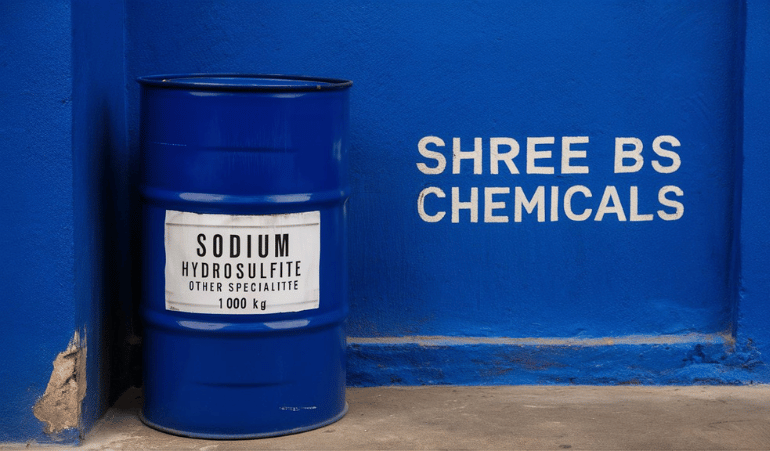
Sodium Hydrosulfite
Sodium hydrosulfite, also known as sodium dithionite (Na2S2O4), is a vital reducing agent in the textile industry, primarily used for bleaching and color stripping. It plays a significant role in brightening fabrics, removing excess dye, and achieving consistent colors without damaging natural fibers like wool and cotton.
Sodium Hydrosulfite is primarily used for bleaching, color stripping, and indigo dyeing. It brightens fabrics, removes excess dye, and corrects dyeing errors without harming natural fibers.
It is extensively used for bleaching natural fibers such as cotton, wool, and silk, where it effectively removes excess dyes, whitens fabrics, and enhances brightness without causing fiber damage. In color stripping, sodium hydrosulfite allows for the removal or reduction of existing dyes, making it possible to correct dyeing errors or prepare fabrics for re-dyeing. This chemical is also crucial in indigo dyeing processes, where it reduces indigo to its soluble leuco form, enabling the dye to penetrate the fabric and produce deep, uniform colors.
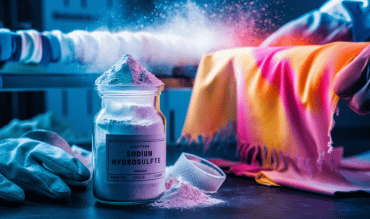
Benefits of Sodium Hydrosulfite In Textile Chemical
-
Bleaching Agent
-
Color Stripping
-
Vat Dyeing Textile Printing
-
Textile Printing
What is sodium hydrosulfite used for in the textile industry?
Sodium hydrosulfite is primarily used as a reducing agent in bleaching, color stripping, indigo dyeing, vat dyeing, and textile printing. It helps remove excess dye, brighten fabrics, and develop vibrant, uniform colors.
Can sodium hydrosulfite be used on all types of fabrics?
While it is most commonly used on natural fibers like cotton, wool, and silk, sodium hydrosulfite can also be used on certain synthetic fibers, although its effectiveness may vary depending on the fabric and dye type.
Is sodium hydrosulfite safe to use in textile processing?
Yes, when handled properly, sodium hydrosulfite is safe for use in textile processing. However, it should be used in a well-ventilated area, and protective gear should be worn to avoid skin and eye contact.