-
-
Mon - Sat 9:00 AM - 6:30 PM
-
Plot No. 366, Shree BS Chemicals, Sector 29, Part 2, Panipat, Haryana
UV Protection Agents (Textile Chemical)
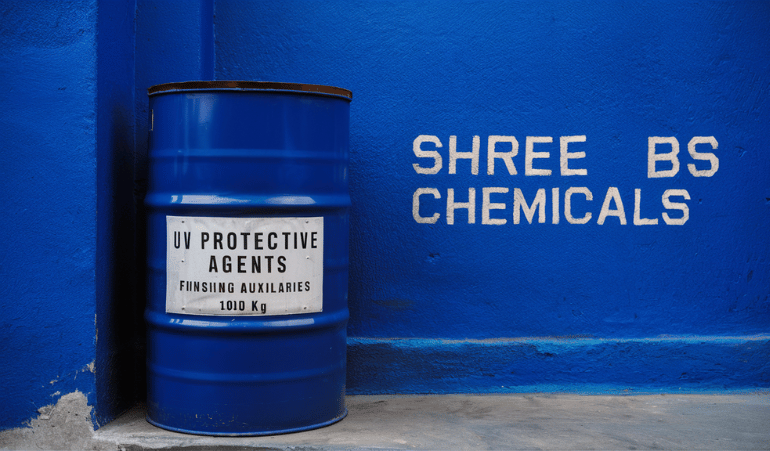
UV Protective Agents
Textiles with UV protection effectively protect the skin from harmful sun radiation or UV rays. If suitable materials and designs are used, they offer particularly good protection from more intensive sun radiation. They provide extensive, simple and long-lasting protection for the body.
UV protective agents are applied to textile fabrics to improve the fabric's UV protection factor (UPF) and sun protection factor (SPF).
Protection is primarily achieved through the correct material and suitable design of the clothing or shading devices. In addition, the usage condition, body covering or age of the material must also be taken into account. Why? The UPF can change significantly as a result of stretching the shirt on the body or by opening out the sunshade.
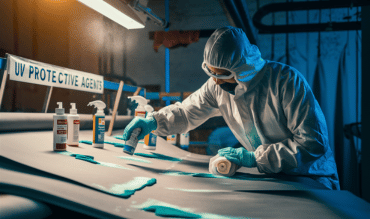
Factors That Affect UV Protection :
-
Stretch
-
Weight
-
Color
-
Weave
What are UV Protection Agents In Textile Industry?
Textiles with UV protection effectively protect the skin from harmful sun radiation or UV rays.
Function Of UV Protection Agents In Textile Industry?
UV-protective agents in textiles are organic or inorganic materials that absorb UV radiation in the 290–360 nm range. These materials are applied to the surface of the fabric to improve the sun protection factor (SPF) and UV protection factor (UPF). UV absorbers convert electronic excitation energy into thermal energy, and function as radical and oxygen scavengers.