-
-
Mon - Sat 9:00 AM - 6:30 PM
-
Plot No. 366, Shree BS Chemicals, Sector 29, Part 2, Panipat, Haryana
Citric Acid (Textile Chemicals)
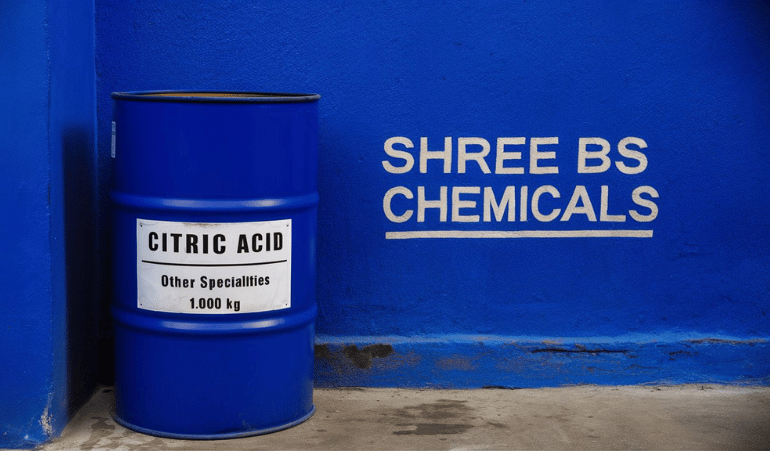
Citric Acid
Citric acid, with the chemical formula C₆H₈O₇ and a molecular weight of 192.13 g/mol, is a weak organic acid that plays a crucial role in various biological and industrial processes. It features a structure with three carboxyl groups (-COOH), which contribute to its sour taste and acidity. Naturally found in citrus fruits like lemons, limes, and oranges, citric acid is also an essential intermediate in the citric acid cycle (Krebs cycle), which is vital for cellular respiration in living organisms. In its physical form, citric acid appears as a white crystalline powder or a colorless liquid, highly soluble in water, and typically has a pH of about 3 in solution.
Citric acid is widely used in various industries due to its versatile properties and functions. Commonly found in food and beverages, it serves as a preservative and flavoring agent, enhancing the sour taste of products like candies, soft drinks, and sauces.
Its versatility extends to numerous applications, including its use as a preservative and flavoring agent in the food industry, a pH adjuster and stabilizer in cosmetics and pharmaceuticals, and a cleaning agent due to its chelating properties that help dissolve mineral deposits. Recognized as generally safe by the FDA when used in food, citric acid can, however, cause irritation in concentrated solutions. Overall, citric acid is an important compound that significantly impacts various sectors, including food, cosmetics, and cleaning products.
Benefits Of Citric Acid
-
Natural Preservative
-
Flavor Enhancer in Food and Beverages
-
Prevents Bacterial Growth
-
Enhances Nutrient Absorption
What is citric acid?
Citric acid is a weak organic acid with the chemical formula C₆H₈O₇. It is naturally found in citrus fruits and plays a vital role in various biological and industrial processes.
Is citric acid safe to consume?
Yes, citric acid is generally recognized as safe (GRAS) by the FDA when used in food products. However, concentrated forms can cause irritation to the skin and eyes.
How is citric acid produced?
Citric acid can be extracted from citrus fruits or produced through fermentation processes using certain strains of mold, such as Aspergillus niger, which converts sugar into citric acid.
Can citric acid be used as a natural preservative?
Yes, citric acid acts as a natural preservative by inhibiting the growth of bacteria and fungi, making it an effective ingredient in various food preservation applications.